
Sailing clothing is an area often overlooked by many people new to the sport of dinghy sailing. Dinghy Sailing clothes can be very expensive and it can often cost more to kit yourself out with a full sailing outfit than it does to buy a boat so it often tempting to make do with and old t-shirt, training shoes and shorts. If you only sail in summer on inland waters then this may be perfectly acceptable but if you sail throughout the winter or at sea then you have to be far more careful.
In fact during the winter months its essential to wear the correct clothing as doing so can literally mean the difference between life and death. In the depth of winter being in the water for only a few minutes is enough time for hypothermia to set in. For this reason many clubs insist on all sailors wearing wetsuits during the winter months. Obviously drysuits are even better.
Below is a guide to sailing clothes.
Wetsuits
Wetsuits work by trapping a layer of water in-between your skin and the neoprene of the suit. Your body then warms the water providing thermal protection. Wetsuits are available in a wide range of types and configuration.
‘Shorties’ are wetsuits with short legs and arms and are generally for spring/summer use. Such suits are normally manufactured from fairly thin neoprene, often 2-3mm. Spring/summer wetsuits can also be purchased in full length versions. Winter wetsuits, also known as ‘steamers’ are much thicker, often constructed from 5mm and above neoprene.
Wetsuits can be purchased in a variety of qualities and price ranges. Spring/summer suits can cost between £40-£120 whilst winter suits can cost between £100-£250. The higher the price, the more technical the wetsuit.
When purchasing a wetsuit its essential that it is a good fit. Too tight and it will be uncomfortable to wear and will seriously restrict your movement. Too loose and it won’t keep you warm.
Drysuits
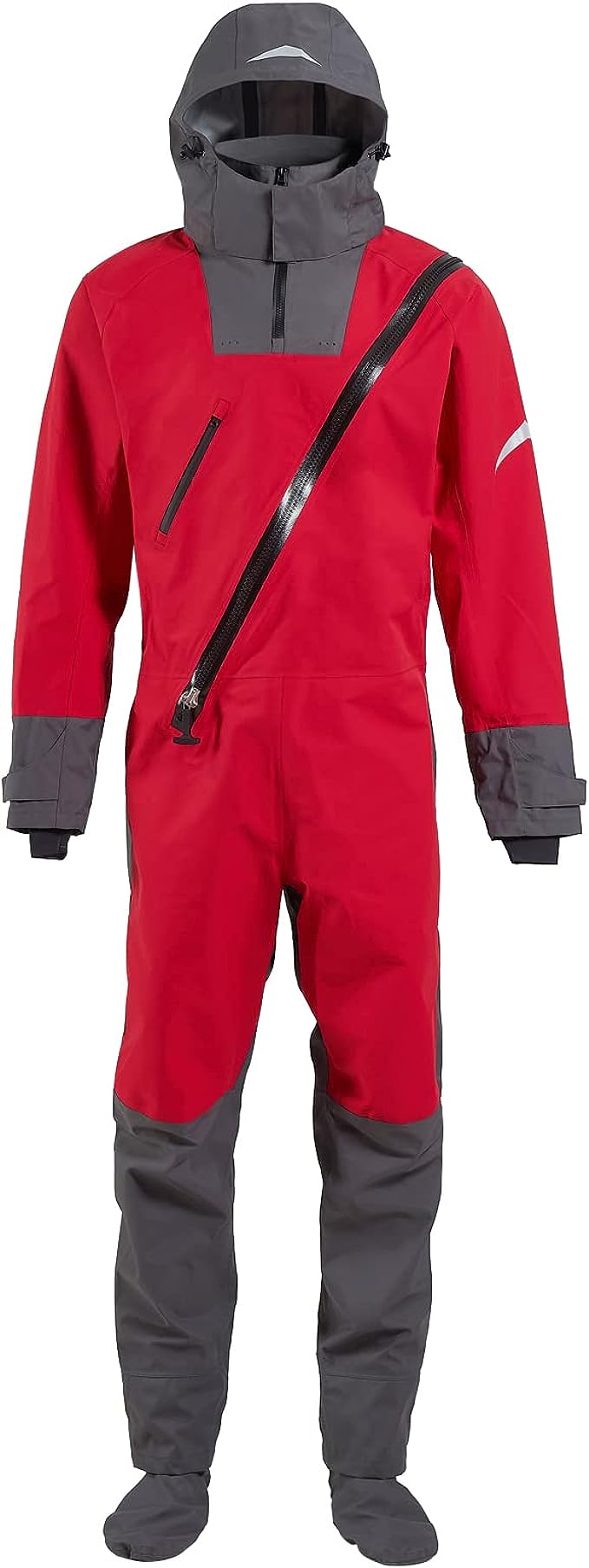
A drysuit, as the name suggests is designed to keep you dry. A drysuit consists of a fully waterproof outer layer with watertight seals around the neck, wrist and feet to ensure that no water enters the suit. A drysuit on its own provides little warmth, but thermal layers can be worn underneath it to provide this. Higher specification (and priced) suits are often breathable which reduces condensation in the suit.
For dinghy sailing in the depths of winter, a drysuit is highly desirable and if sailing at sea then it could be argued that its essential.
Wetboots
Wetboots are usually made of neoprene and keep your feet warm in the same way as a wetsuit does. Boots designed for windsurfing are often not sturdy enough for dinghy sailing as using toestraps will quickly wear the boots. Look for wetboots with reinforced uppers designed to resist the wear caused by using toestraps. Wetboots should also offer a good level of grip when moving around the boat.
Spray Tops
A spray top is a lightweight waterproof and wind proof garment that is worn as an outer layer. These greatly reduce wind chill and keep the wearer dry so increasing the range of weather conditions for which an individual wetsuit would be suitable. More expensive spray tops are often made of a breathable fabric.
A spray suit is similar to a spray top but covers the body and legs.
Sailing Gloves
Gloves are worn for two purposes, warmth and protection. Pulling on ropes can be hard on the hands so some form of protection is essential. Sailing gloves are often reinforced with leather or some other hard wearing material on the palms. Different materials are used and many gloves may manufactured using neoprene for increased warmth. Summer gloves are often fingerless for easier manipulation of ropes etc.
Sailing can be hard on your hands and not just with the cold, pulling on ropes can also make your hands sore. Protective gloves with hard wearing reinforced patches help to provide protection and extra grip. Neoprene gloves are available for increased warmth.
Buoyancy Aids/Life Jackets
Buoyancy aids are mandatory in most sailing clubs in the UK. They are designed to give the wearer some degree of buoyancy in the event of a capsize. They should be comfortable and give minimum movement restriction. Buoyancy aids are NOT designed to keep your head above water.
A life jacket will keep your head above water whilst unconscious. However many designs of life jacket are cumbersome or require inflating. This is not ideal when sailing a dinghy as ending up in the water is part of the sport !
-
 Buy productQuick View
Seagull Azure Waterproof BREATHABLE Spray Top
£42.99Buy productQuick View -
 Buy productQuick View
Vzkak Dry Suits for Men in Cold Water Front Zip,Kayaking Equipment, with Adjustable Hood,Red
£396.50Buy productQuick View -
 Buy productQuick View
Gul Mens Code Zero Stretch U-Zip Drysuit Dry Suit With Con Zip
£479.95Buy productQuick View -
 Buy productQuick View
Helly Hansen Mens Crew Midlayer Jacket
£105.44Buy productQuick View -
 Buy productQuick View
Osprey Men’s Full Length 3 mm Summer Wetsuit
£36.99Buy productQuick View